Showing posts with label quotes. Show all posts

Friday, September 21, 2018

Faith of the heart

When the little tears start, and the stone at the center of my heart is softened, just a little, it is the moment when my lost faith is being rekindled.


Dearest Saint Therese of Lisieux, you said that you would spend your time in heaven doing good on earth.
Your trust in God was complete. Pray that He may increase my trust in His goodness and mercy as I ask for the following petitions…
That my faith in the deepest longings of my heart will be rekindled.
Pray for me that I, like you, may have great and innocent confidence in the loving promises of our God. Pray that I may live my life in union with God’s plan for me, and one day see the Face of God whom you loved so deeply.
Saint Therese, you were faithful to God even unto the moment of your death. Pray for me that I may be faithful to our loving God. May my life bring peace and love to the world through faithful endurance in love for God our savior.

Friday, June 1, 2018

Confidence

Confidence is my favorite word. It is the foundation of my state.

Confidence is the talisman I grasp with my mind, the energy to push out all thoughts of weakness and doubt. 

The still point. The constant. 

I need not defend. There is no question.


CONFIDENCE defeats the primary weakness in the spiritual culture of Mormonism: a constant indulgence in moral assessment and questioning which easily leads to a life of self-doubt.


An excerpt from St. Therese of the Child Jesus: Master of Her Temperament, by Marian T. Horvat, Ph.D


“It is confidence, and confidence alone, that must lead us to love." -St. Therese

Someone might wonder: Didn’t St. Therese ever become discouraged over her small failings and inability to do the great things she desired for the love of God? 

In fact, Therese had by her temperament a natural tendency toward discouragement. That she recognized this disposition is evident from the first of the three resolutions she made on her First Communion day: “I shall not be discouraged.”

In Carmel, she wrote a beautiful prayer for a novice about humility. In it she said that she would wake in the morning with a strong resolve to conquer her pride; in the evening she would be discouraged knowing she had failed. Then she realized that this discouragement itself was but itself a form of pride, and this would make her more discouraged. It is the vicious circle many of us have experienced. St. Therese explains how the dilemma was resolved:
“Since it has been given to me to understand the love of the Heart of Jesus, I own that it has chased all discouragement from mine. The remembrance of my faults humiliates me, and urges me never to depend on my own strength, which is nothing but weakness. Still more does this remembrance speak to me of mercy and of love. When, with all filial confidence we cast our faults into the devouring furnace of love, how should they not be totally consumed?”
It was only confidence that could conquer discouragement and melancholy. 
“What offends Jesus, what wounds Him to the Heart,” she insisted to her novices, “is lack of confidence.” 


An excerpt from St. Therese of the Child Jesus: Master of Her Temperament, by Marian T. Horvat, Ph.D

Monday, April 23, 2018

Stava Cintamani

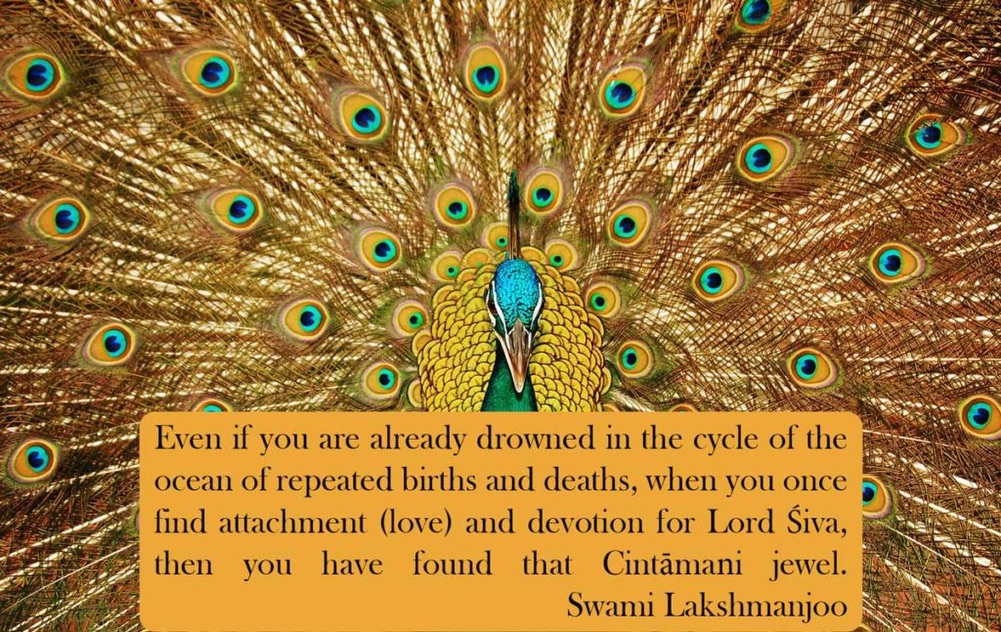
“Even if you are already drowned in the cycle of the ocean of repeated births and deaths, when you once find attachment (love) and devotion for Lord Śiva, then you have found that Cintāmaṇi jewel.”
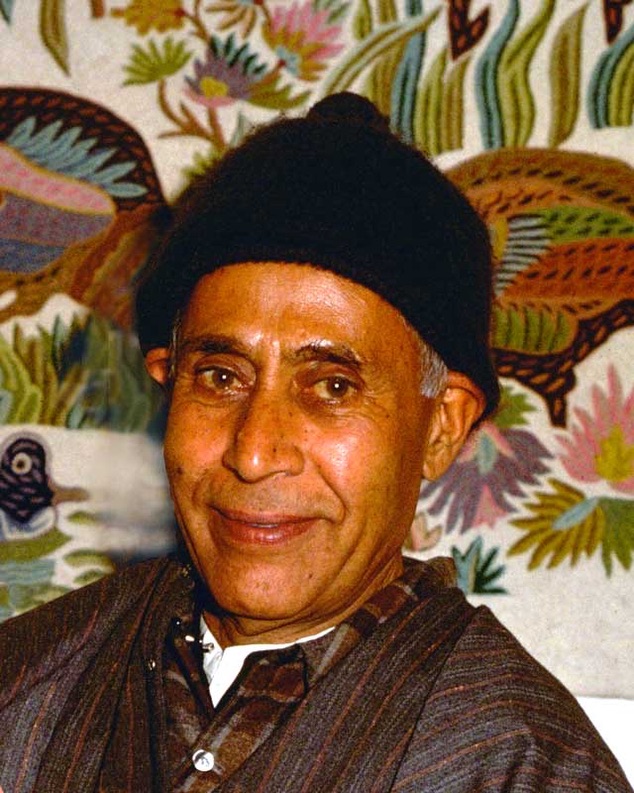
~Swami Lakshmanjoo


Lakshmanjoo Academy News!
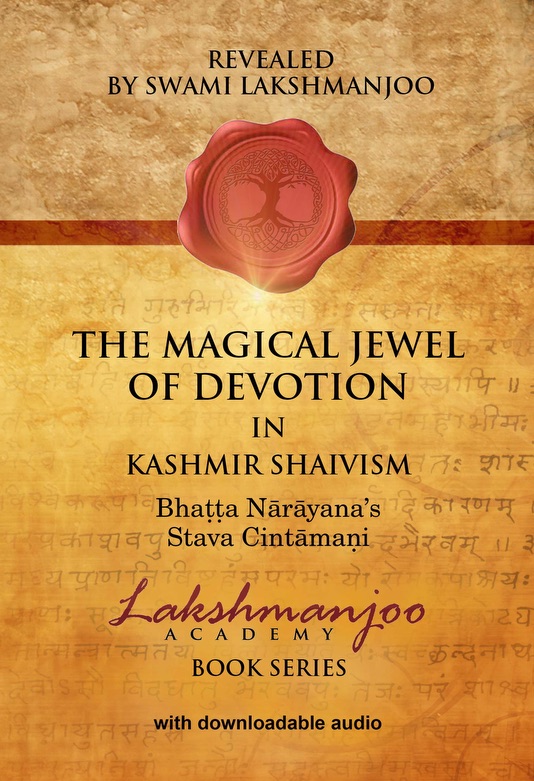
We are happy to announce the soon to be published newest addition to the Lakshmanjoo Academy book series:

The Magical Jewel of Devotion
in Kashmir Shaivism
Stava Cintamani

The 200 pages plus study set (free audio downloads included) will be released just in time for the annual Birthday Celebrations for Swami Lakshmanjoo on Tuesday the 9th of May.
ORDER NOW!! - PRE-SALE - Available for delivery at the end of May. You can pre-order your copy now by clicking on the image below… 


We will be studying this and other texts of Kashmir Shaivism at the upcoming Study Retreat, from 10th to 13th May following the Birthday celebrations. Read more here

“Even if you are already drowned in the cycle of the ocean of repeated births and deaths,
when you once find attachment (love) and devotion for Lord Śiva, then you have found that Cintāmaṇi jewel.” ~Swami Lakshmanjoo

Devotional hymns have always held an important place in the history of the “Monistic teachings of Kashmir Shaivism.” The recitation of such hymns is a common part of daily spiritual practice for many Shaiva aspirants.

Stava Cintāmaṇi – The Magical Jewel of Devotion in Kashmir Shaivism – is a sublime and unique hymn addressed to ‘Lord Shiva’, whom the author, Bhaṭṭa Nārāyaṇa  clearly holds as the Supreme Reality. Though highly devotional, these hymns are at the same time practical and deeply philosophical.

Swami Lakshmanjoo’s love for devotional hymns is evidenced by the fact that he translated and commented on the Stava Cintāmaṇi on three occasions. The first, in 1978, was recorded by John Hughes and forms the basis of this present publication. Then, in 1990, he gave an “impromptu translation” during which time Denise Hughes compiled extensive hand written notes. Lastly, in 1991, Swamiji recorded his recitation of the verses, giving brief translations to selected verses only.

Swamiji tells us that Bhaṭṭa Nārāyaṇa was one of the most important Kashmir Shaivite masters, and that he lived approximately one century before the illustrious Abhinavagupta (924-1020CE). This places Bhaṭṭa Nārāyaṇa somewhere between Vasugupta and Somānanda. Together these highly revered masters disseminated the foundational texts of a system of philosophy that would later become known exclusively as ‘Kashmir Shaivism’.

It was in the wake of this new revival that Bhaṭṭa Nārāyaṇa composed his Stavacintāmaṇ̣i. Little is known about his life, as he hardly mentions himself in his writings, but taking into account the spiritual climate of his generation, with the majority of the population being entrenched in dualistic and mono-dualistic practices, one could easily assume that he had composed his devotional hymn with the underlying intention of introducing and educating sincere spiritual aspirants in the ‘non-dual-monistic’ way of thought and practice. Since later commentators indicate that the Stava Cintāmaṇi was well received and highly influential, it is more than likely that Bhaṭṭa Nārāyaṇa achieved that goal.


That the author was endeavouring to enlighten his audience in the direction of non-dual Shaivism is clearly visible in the inclusion of his interpretation of the ancient and highly revered Gāyatri mantra, where he says:

“I don’t care to possess that effulgent light (tat savitur varenyam) of the three worlds (bhuḥ, bhuvaḥ and svaḥ), and I don’t need my intellect elevated to the state of universal understanding (dhiyo yo naḥ pracodayāt); I want only for that effulgent light to direct me on the path of Shaivism – that is all I long for – and that is the only favor I ask of Gāyatrī.”

Longing for this experience the author sings:

“O Lord Shiva, let me merge in Your nature of God consciousness everywhere, so whatever I do in the dreaming state, whatever I say in this daily routine of life, good or bad, let that become divine, and let that be reflected in the mirror of God consciousness always. Let me merge in God consciousness in each and every respect of the daily routine of life, not only at the time of meditation.”

In his hymn, Bhaṭṭa Nārāyaṇa not only addresses this flow of consciousness into the world, but also its flowing back, from the world to its origin – the state of God consciousness. This he perceives in the simple act of bowing, which to him is the ultimate expression of love and devotion towards God. The constant theme that runs like a thread through the one hundred and twenty verses (ślokas) of the Stava Cintāmaṇi is that love and devotion (bhakti towards Lord Shiva) is everything.


The Magical Jewel of Devotion in Kashmir Shaivism - Stava Cintamani


Swami Lakshmanjoo was so excited to share this particular hymn with the world that when leaving his Ashram en-route to America in February of 1991, he carried a copy of Stava Cintāmaṇi safely tucked under his arm. A few days after his arrival in Los Angeles he sat in the early hours of the morning and recited all the verses of this treasured hymn. This was Swamiji’s last translation of this Magical Jewel of Devotion in Kashmir Shaivism – Stava Cintāmaṇi.


Sunday, April 15, 2018

Keeping words meaningful

SOOKEE - Für immer / Forever

Dann kamen Ironie, Satire, Zynismus, Ästhetik 
Jetzt ist jetzt 
Was kommt als nächstes?
Wie lang kann was dir wichtig ist dich entertainen?

Then came irony, satire, cynicism, aesthetics 
Now is now 
What's next? 
How long can you care for what is important to you? 


Art Ensemble of Chicago, a live tour of life off the map.
I sat a spell under Lester Bowie's horn in San Francisco 1983

Ask any writer. It is a struggle in our age to try and keep trying to make and keep words meaningful. The role of art (including music, including jazz) has evolved to include staying one step ahead of being gobbled up by the post-modern "now" that cannot escape "what's next?"


Wednesday, April 11, 2018

Thy feet


I touch with the edge of the far-spreading wing of my song 
thy feet which I could never aspire to reach.

~ Rabindranath Tagore


Tuesday, April 3, 2018

Melt away

"The most loving thing you will ever do for yourself in your entire life is to saturate your own heart. Bathe your heart in your own attention until all of the walls in your heart melt away, and the brilliance and the beauty and the joy that is your own essence rises up and expresses itself in the form of your life."--Swami Chetanananda


Photo: The Movement Center Swami Chetananda


Thursday, February 8, 2018

I will not pray unless I want to


“God does not require that we be successful 
only that we be faithful.” 
― Mother Teresa

I am not Catholic, but I have been praying the rosary and the Liturgy of the Hours for a few days now. I feel the need to pray.

Prayer for me is made of worship, and of self-sacrifice. I offer up my body and soul in prayer. I offer my time and my focus. I am focused on God; my love and longing for God, which has been so great all my life.


I remember when I was a girl, and standing in the street near my house, and asking myself: what do I want to be when I grow up? My answer was either a nun or a Playboy centerfold! I do not see these as being all that far apart. They both celebrate life and the source of that life.

Still, I thought. That must be why I have a huge scar on my stomach, God wants me to be a nun instead.

Later, when I found out Mormons do not have nuns, I was not devastated--but it was close.


As an adult, I have found Catholics to be pretty weird. But I am coming to understand them better by borrowing their prayers. They feel an unbroken line from, and are the keepers of the people and events of the Lord's time on earth. They think about these constantly, in rosary prayers to Mary and others, in the Stations of the Cross, in their Mass, and in their religious peoples' lives, their activities, the symbolism of their habits and the structure of their days.


I am trying prayer in a specific way. I do not pray unless I want to. A feeling of wanting to pray comes up naturally. No desire--no pray. Also, if I lose interest in the middle of praying, (which does happen occasionally), I choose to stop praying.

Today, I felt strongly that I didn't want to pray. I thought everything to do with praying was more than painful, a sort of jerking around in my collapsed, depressed state.

"I will not pray unless I want to. Even if I don't pray ever again."

The thought I might stop made me sad. I found myself clicking on "nun links" that now come up on my YouTube side bar. I began to feel the desire again, to pray.


Praying is a way to get around the part of me that wants to use control of my mind and feelings to "get somewhere," spiritually or otherwise. 


I have been seriously and continuously contemplating how to move forward in my sadhana--and to what end--for months now. I tried a lot of things, and mostly accomplished a bunch of trying. My life goes in a big circle. Everything I'm doing now will become the opposite eventually. When I try to do it, I get in the way of grace. I have to step back. 

Wrestling myself to the floor at 5am is not me, never will be. The life of a nun is not for me. Which is hard because I long so much for a completely spiritual life. I don't feel that my current life fulfils that purpose in me. I am still learning.


After I pray The Office and The Hours, and the Crown Rosary or daily rosary, my body has a serene feeling of energy all in-line and in a gentle, persistent flow. I feel lighter, my mind and ego at rest. 

"I feel that my karmas, my pain, my despair, all of it is dissolving in the sweet attitude and daily results of prayer."

In the question I have been asking over and over, should I go through or around my obstacles, I have always returned to this answer: go around. I'll never wrestle that mess to the ground. Or if I do, I'll only keep it down for two seconds. It's all an illusion. Why sacrifice everything to fighting an illusion?

I think I have found the answer. I offer my prayer, including the results. If I can desire to pray, and then pray, I create the shakti in my being that dissolves all that has burdened me, and chained me to the vagaries of the world around me.

And so, I desire very much to be freed, and also to be continuously apart from the world. God is what matters to me.


After I pray, I'm at a loss of what to do. Everything else seems course, and destined to pull my lovely state back into illusion and pain. I don't think I can pray all the time. Just as sure as the desire to pray will come along, the desire to stop praying will come as well. I'm not going to fight it out with this part of me. Making myself do something is sure to eradicate any possibility of doing it at all. I'm just that way.

Meanwhile, I do continue to repeat the mantra silently, and I am trying out experiencing this as worship, in addition to my main experience as identification and purification. It's interesting to me that this feels too intimate! When I think of God, I no longer think of God as "inside" or "outside" of me. I guess there's no way to worship God without worshiping myself. Which is the point of the mantra in any case.

"My discipline is to only do it when I want to!"

As Mother Teresa said, "God does not require that we be successful, only that we be faithful." The idea of being faithful thrills me. It frees me from the content. If I prayed, or not, if I felt like praying or not. These dark waters would suck me down right away. I go around them! If only I can be faithful, and pray when I desire to pray, today. Who knows about tomorrow.


So, today I did not feel like praying. I was sad. "It's all over," I thought. "Like it always is." I have been wrestling with this off and on my whole life.

As I say, I started clicking on "nun links" that were coming up in my YouTube sidebar, since I've been surfing around looking for prayers. And I found that watching just one of these videos brought up all of my desire to pray, and to live a life that is based upon what matters, which is God.

It's part and parcel of the thoughts of a young girl who found that the things that mattered to me were not reflected in the world around me.

Finding my place in the world has been the real struggle of my entire life. I wish that I could be a nun. Maybe I can be, after all. A convent of one.

At least for today.


Thursday, January 25, 2018

Destruction of ignorance

"As the sun appears after the destruction of darkness by dawn, so Atman [the Self] appears after the destruction of ignorance by knowledge."

~ A verse from Atmabodha


Jagadanandana

"If you want to advance on the path of suddha bhakti, not many rules and spiritual practices are necessary. Simply beg for the complete shelter of krsna-nama and thus purify your heart and consciousness."

Srila Gauranga's instructions are for grhastas as well as vairagi devotees. He said:
"Take great care not to let a moment pass without uttering krsna-nama."

From the teachings of Srila Jagadanandana Pandita


Photo: Bhakti Vedanta Book Trust Intl

Tuesday, October 31, 2017

I was sleeping before

An excerpt from the Dakshinamurti Stotram, a hymn to Shiva composed by Adi Shankara (Vedanta), a concise rendering of the teachings of the Vedas and an expression of gratitude to He who makes one realize these truths.

Mrityunjaya Stotram shloka six
Rāhugrasta-divākarendu-sadṛsho māyāsamācchādanātSanmātraḥ karaṇopasaṁharaṇato yo'bhūtsuṣuptaḥ pumān .Prāgasvāpsamiti prabodhasamaye yaḥ pratyabhijñāyateTasmai śrīgurumūrtaye nama idaṁ śrīdakṣiṇāmūrtaye .. 6..
Like the eclipsed sun and the moon, covered by Maya, one sleeps after withdrawing his senses into that self. To him who on awakening makes one realize that "I was sleeping before", to that Dakshinamurti, the teacher, I offer my salutations.


Adi Shankara was an early 8th century Indian philosopher and theologian who consolidated the doctrine of Advaita Vedanta. He is credited with unifying and establishing the main currents of thought in Hinduism. 
Wikipedia: wikipedia.org/wiki/Adi_Shankara


Sunday, October 22, 2017

My "go to" contemplation

My "go to" dharana/dhyana. My focus and practice. My contemplation. 


My "go to" dhyana is to nudge myself out of multiplicity. I experience myself as formless, unlimited consciousness, the knower, and everything else a play of consciousness on the screen of life, the known. The play normally seems three-dimensional because of the magic of maya.

Inherent in this contemplation is acknowledging that the projection of maya cannot satisfy/protect me, or cause lack/harm me. Thinking otherwise is bondage. 

I want freedom. I see myself "unlatching" from the screen of the world going by. I let the illusion of satisfaction and lack slip away. It becomes a dance of light. And I choose freedom, the source. The real prize.

I can only do this because of the grace of my guru, because I have received shaktipat.


Step well


I also use my mind to slip out from the experience of multiplicity. When I am in this state, I experience Oneness, One without second. A singularity. My awareness resides in the great consciousness, the only Self. Immediately I am filled with great bliss.

I can reshape my consciousness like this for several moments at a time. 

An interesting aside is that my ability to shape my own consciousness was greatly improved by my years in Wicca, where "spells" are created by this containing and shaping of awareness, a discipline and practice that grows in effectiveness over time.

I also use this skill as a writer of fiction.


Swami Lakshmanjoo:

The word dhyana means “contemplation.” It is another mode in anavopaya (a means of enlightenment). Dhyana is contemplation on some point.  
There are different forms of dhyana. For example, you are practicing dhyana when you contemplate on the lotus in your heart, or on the meaning of some mantra such as the mantra “so’ham” or the mantra “Shiva.”  
This is a higher form of anavopaya because it is contemplation without any shape, without any form. If you were to contemplate on Lord Shiva as having a particular form, a particular shape, that is a lower form of anavopaya. It is contemplation with form.

Source: Kashmir Shaivism, The Secret Supreme, by Swami Lakshmanjoo
All Content is subject to Copyright © Universal Shaiva Fellowship, John Hughes.

Monday, October 16, 2017

Shrimad Bhagavad Gita


The Bhagavad Gita, The Song of the Lord, is chanted from a Sanskrit text of 18 chapters and 700 slokas (verses). If you're new to the Gita, you might begin by listening to a chapter while you study, work or relax. You will notice at a certain point that your mind will become clear and steady, and your spirit will feel uplifted. Try listening to all of the Gita. Both of the renditions below include all 18 chapters. There are many more versions on YouTube, etc.

I enjoy listening to the Gita while I attend to the duties of my home life. My experience of devotion and my focus on my spiritual intentions are blessed and lifted up to a higher level of ease and joy. 

You may choose to study the Bhagavad Gita, in which Lord Krishna reveals the highest forms of Yoga to Arjuna--and all of his devotees. My personal favorite translation for study is Jnaneshwar's Gita, which includes the exquisite commentary by the beloved Marathi saint Jnaneshwar in the English translation by Swami Kripananda.
You may decide to learn how to chant the Gita. Chanting with a video offering clear and correct pronunciation of the Sanskrit will help. Any time spent, no matter the proficiency or lack thereof, will bear tremendous spiritual fruit.

The Gita contains loving and precious revelations from the Lord himself. Find the precious jewels waiting in the Bhagavad Gita for you!


Bhagavad Gita ~ Complete Sanskrit recitation (Isha/Sacred Verses
Very subtle musical changes in the background are helpful for the Western ear

Introductory mantrasMahamrityunjaya - Mangalacharan  
A prayer to Shiva, recited by Shubha Mudgal (Isha/Sacred Verses)


Click through to playlist on YouTube with links to download


The Bhagavad Gita recited by Kumari Vanisree and
Kumari Vijayalakshmi of Ramakrishna Mutt Bangalore


Click through to video on YouTube with links to download
 Main chant starts at 17:38


Saturday, September 30, 2017

The nectar of that nearness


When that time will come? I want to ask You, when that day will come for me, when that day will appear, when I will leave all other things, all of the other activities of the world, and be focused only to that point, i.e., just to embrace You and taste the nectar of that nearness of that devotion, love? When that day will come for me? Tell me.
~Swami Lakshamanjoo commentary, Utpaladeva's Shivastotravali, Chapter Nine


Friday, September 22, 2017

I am God in motion

I am God in motion. 
"Space and time are God's way of making sure everything doesn't happen at the same time and in the same place." ~ unknown


Saturday, March 25, 2017

Thursday, March 16, 2017

Sadhguru: Devotion

"This is something I want everyone to understand: Your devotion is not doing anything to your deity – it is transforming you. If you do not know how to use your devotion to transform you, it becomes deceptive. If you look at things as high and low, superior and inferior, good and bad, you have not tasted the Divine. Don’t look up to anything – don’t look down on anything. If you pay absolute attention to everything, you will see something tremendous in everything. If I see an ant, that ant is my Ishta Devata at that moment..."
"Devotion is a tool to dissolve yourself into what you are doing. This is a way to access intelligence and insight well beyond your normal intellect. You will see things that others would never be able to see. Devotion is not only about going to the temple, breaking coconuts, or doing pooja. Devotion means involvement with no limits, prejudice, and conditions. Who you are dissolves in your activity, as if you are not there. That is when you are a true leader. That is when you are a true devotee."

isha.sadhguru.org/blog/sadhguru/spot/my-ishta-devata/


Sunday, February 19, 2017

Tuesday, January 10, 2017

The quality of Nandi

Nandi Temple in Khajuraho

From an interview with Sadhguru Jaggi Vasudev


Nandi is a symbolism of eternal waiting, because waiting is considered the greatest virtue in Indian culture. One who knows how to simply sit and wait is naturally meditative. Nandi is not expecting Shiva to come out tomorrow.* He is not anticipating or expecting anything. He is just waiting. He will wait forever. That quality is the essence of receptivity. Before you go into a temple, you must have the quality of Nandi – to simply sit. 


You are not trying to go to heaven, you are not trying to get this or that – you simply sit.


Some Nandis have one leg ready as they wait


People have always misunderstood meditation as some kind of activity. No – it is a quality. That is the fundamental difference. Prayer means you are trying to talk to God. Meditation means you are willing to listen to God. You are willing to just listen to existence, to the ultimate nature of creation. You have nothing to say, you simply listen. That is the quality of Nandi – he just sits, alert.
This is very important – he is alert, not sleepy. He is not sitting in a passive way. He is sitting, very active, full of alertness, full of life, but just sitting – that is meditation.


Brihadiswar Temple Tamil Nadu 

Meditation essentially means the individual person is not doing his own thing. He is just there. Once you are simply there, you become aware of the larger dimension of the existence that is always in action. You become aware that you are a part of it.
Even now you are a part of it but becoming aware that “I’m a part of it” is meditativeness. Nandi is the symbolism of that. He just sits and reminds everyone, “You must sit like me.


___________
*NOTE from Jana: Nandi is Shiva's "vehicle," and is traditionally found at Shiva temples. His qualities are related to the qualities of Shiva, who is often portrayed as the master yogi sitting in meditation. Nandi is also considered a deity in his own right.

Friday, December 30, 2016

Fear her when


she 
has 
been through 
hell. 
so believe me when 
I say, 
fear her when she looks 
into a fire and smiles.

e.corona

Thursday, December 8, 2016

Sally Kempton on political upheaval

Photo abhayayoga.gr/newsletters
"For me, this has been one of the most powerful experiences of the last few weeks: realizing that in the midst of the [political] upheaval, there is a current of Shakti that seems to be directing our attention into the heart."
~ Sally Kempton, Awakened Heart Newsletter 7 Dec 2016

Sign up for Sally's mailing list on her website: sallykempton.com


SALLY KEMPTON "Awakened Heart" Newsletter
Dec 7 2016 (excerpt)

"How do we hold onto our recognition of oneness, of interconnectivity, while acting skillfully on behalf of our values? How do we keep our hearts open and intact? 

There is extraordinary energy available now for spiritual practice and transformation.


For me, this has been one of the most powerful experiences of the last few weeks: realizing that in the midst of the [political] upheaval, there is a current of Shakti that seems to be directing our attention into the heart. 


When we follow the direction of that current, rather than letting ourselves be derailed by emotions, we recognize that we are being asked to get deeply centered. Then, any action we take comes from the very center of our own deep wisdom."


 Google FeedBurner

You are visitor number

Search my blog

Select Language


Most popular posts


Search Hinduism and Sanskrit terms

Search results


Receive my delicious posts via email!